Back-office tool
One place for data that lived in four
- Role
- Design & development
- Period
- 2026 – today
- Stack
- Python, SQLite, Shopify Admin API, Bexio API
- Built with
- Claude Code, almost end to end
Four systems, one wine
Nothing here was broken on its own. The problem was the seams: a price corrected in Excel did not reach Shopify, a wine renamed in Shopify no longer matched its Bexio entry, and the PDF fact sheet from the producer sat in a folder that only one person knew the path to. Every new wine meant doing the same work four times and hoping the four results agreed.
What it found on day one
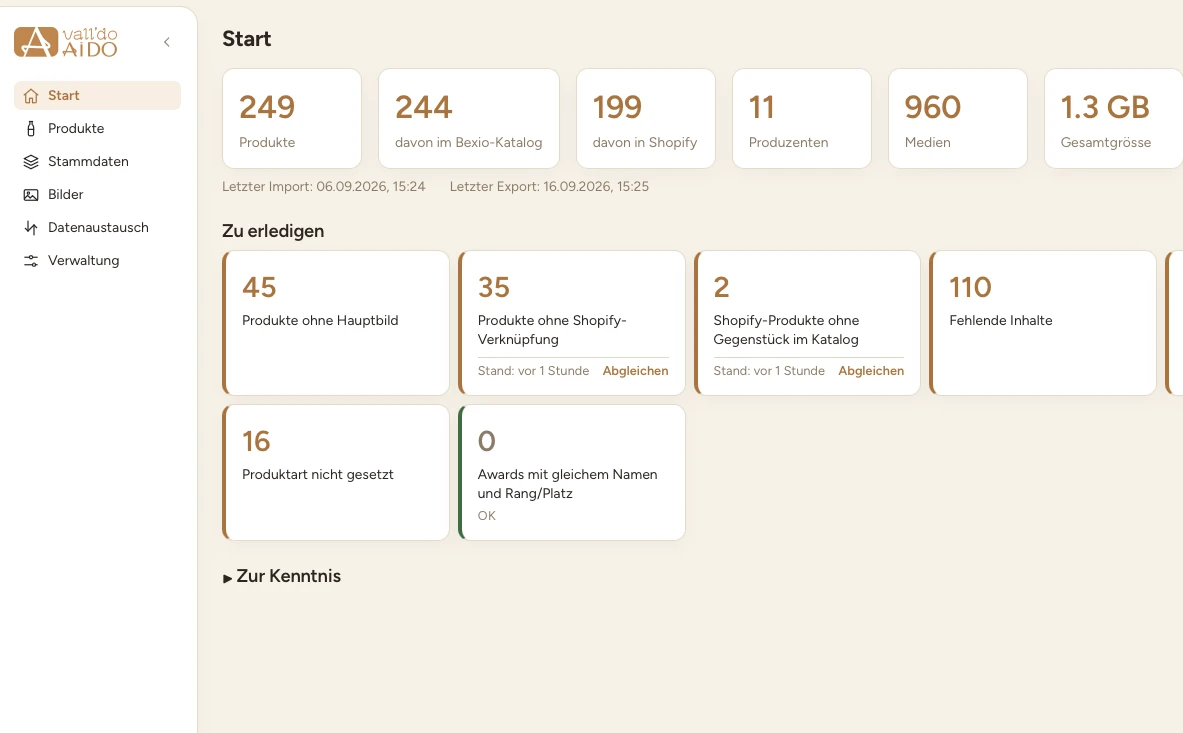
The first job of the tool was not syncing anything — it was looking. Pointing one consistent view at data that had been maintained in four places turned up a backlog nobody had been able to see before. The dashboard still leads with it, because the list is how the work gets prioritised.
One record, two systems
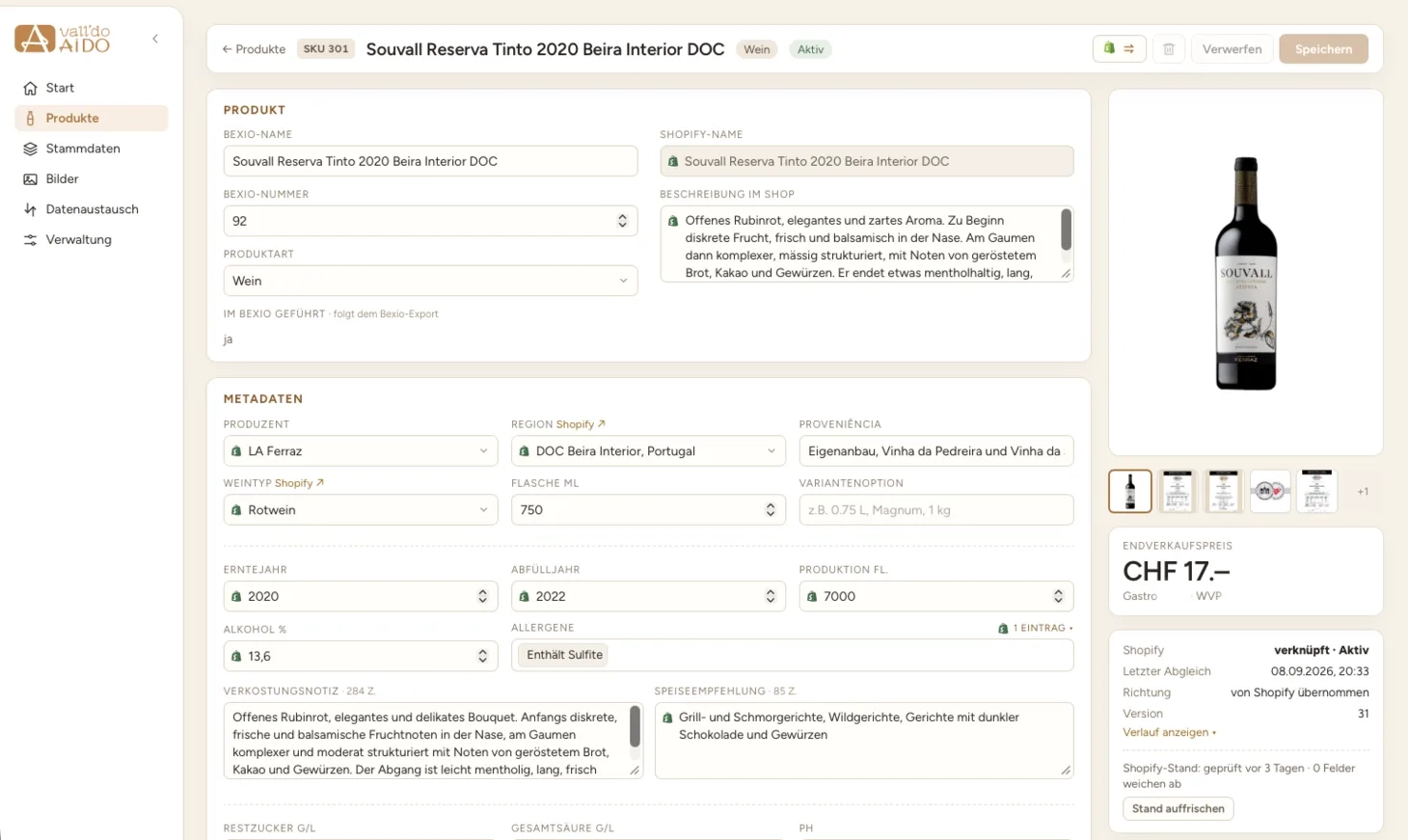
Every product screen shows both sides at once: the Bexio name next to the Shopify name, and a padlock on each field that is owned by Shopify. The sidebar keeps the link state, which direction the last sync ran, a version count and how many fields currently differ — so "these two disagree" is a thing you can see rather than something you find out weeks later.
- Bexio and Shopify names side by side, with per-field ownership
- Metafields the shop reads — producer, region, wine type, vintage, lab values — edited in one form
- Price tiers on one card: retail, restaurant, wholesale
- Last sync, direction, version count, and a field-level diff against the live shop
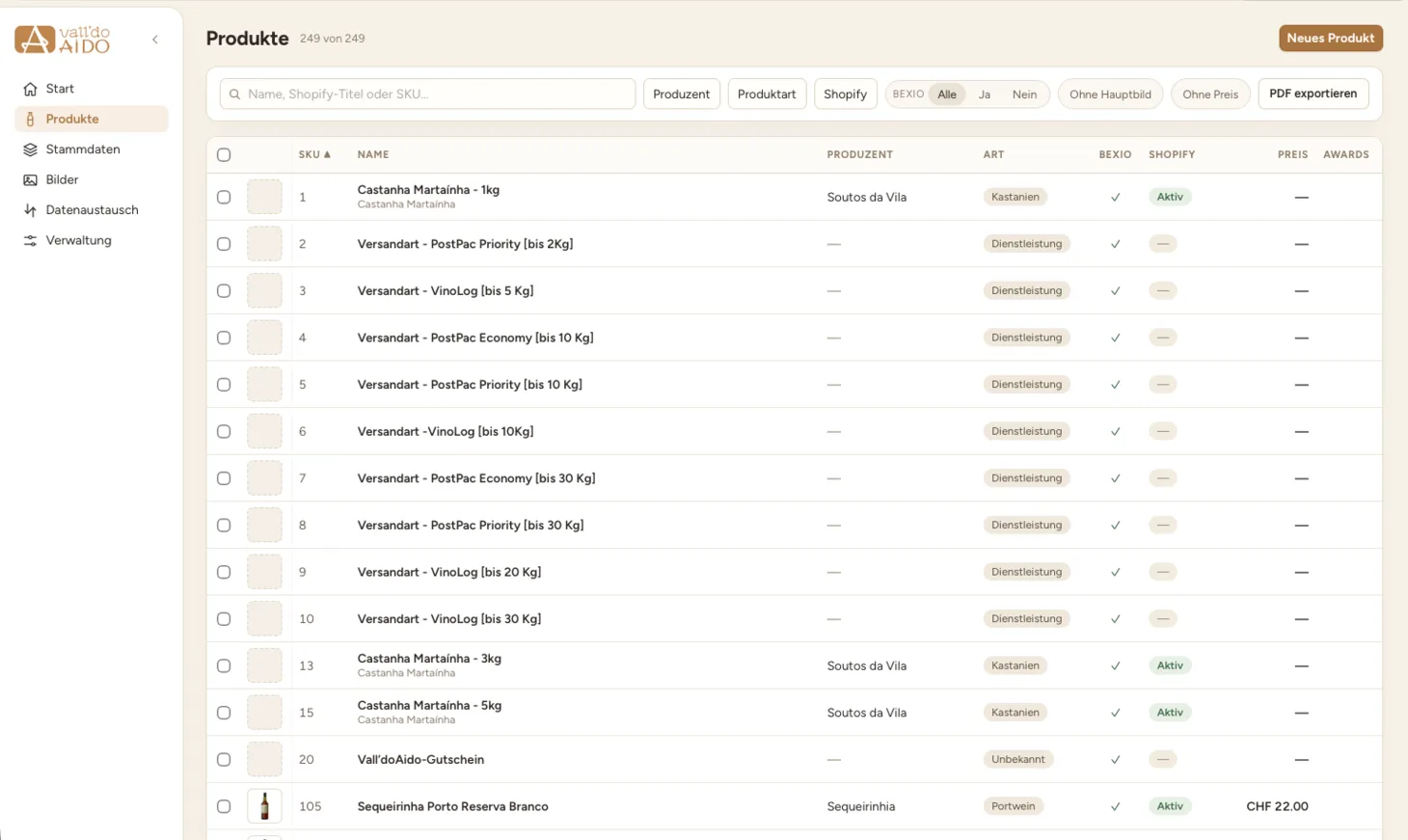
- New products push straight to Shopify over the Admin API
The book that finishes itself
In 2023 I started a printed catalogue in InDesign: one page per wine, laid out by hand. It was never finished — new wines arrived faster than pages did. The same layout is now a PDF export. Pick a selection or take everything, choose which price tier to print, and the book builds in minutes: cover, contents, a divider per producer, then a fact sheet per product using the same icons the print catalogue used.

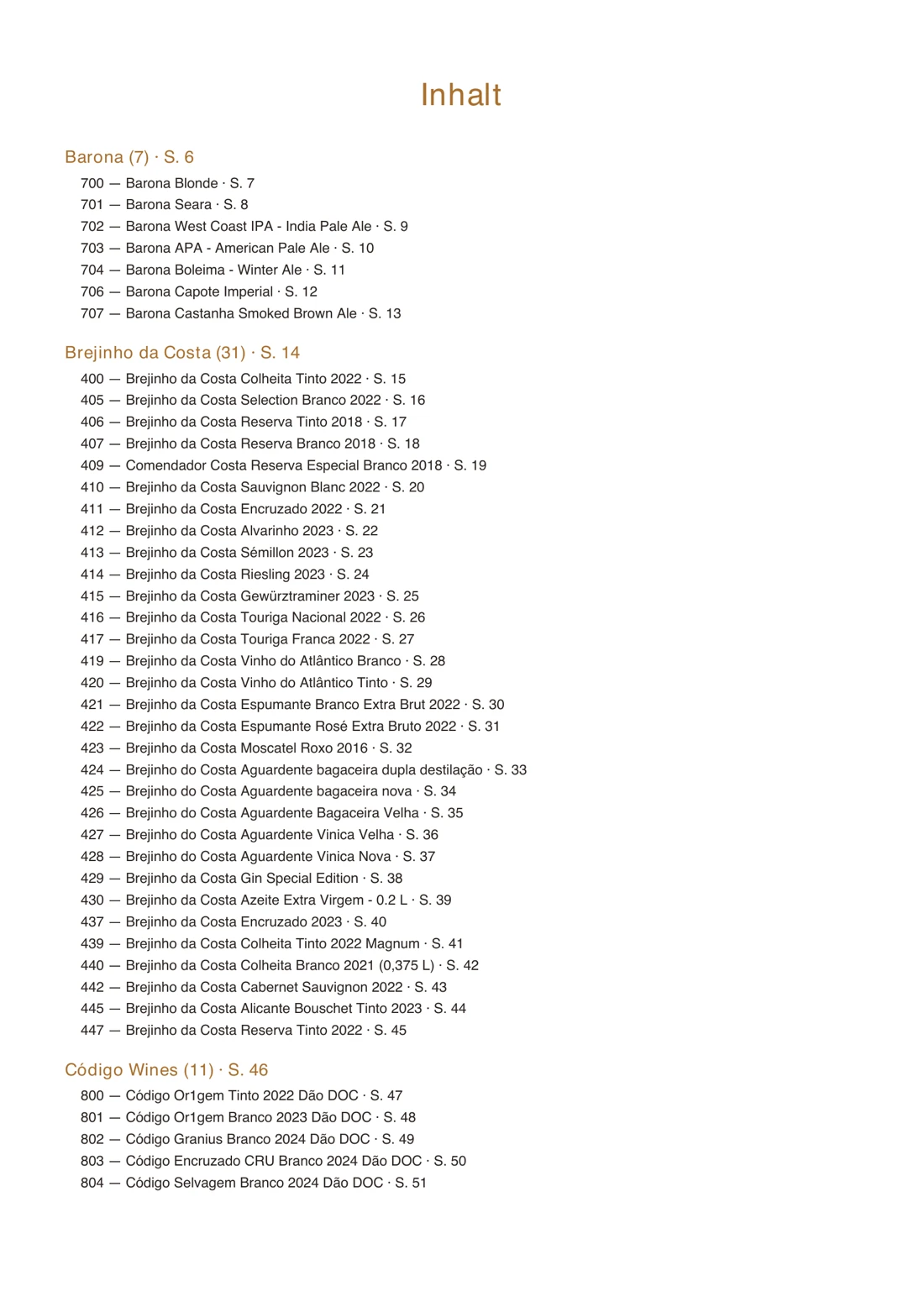

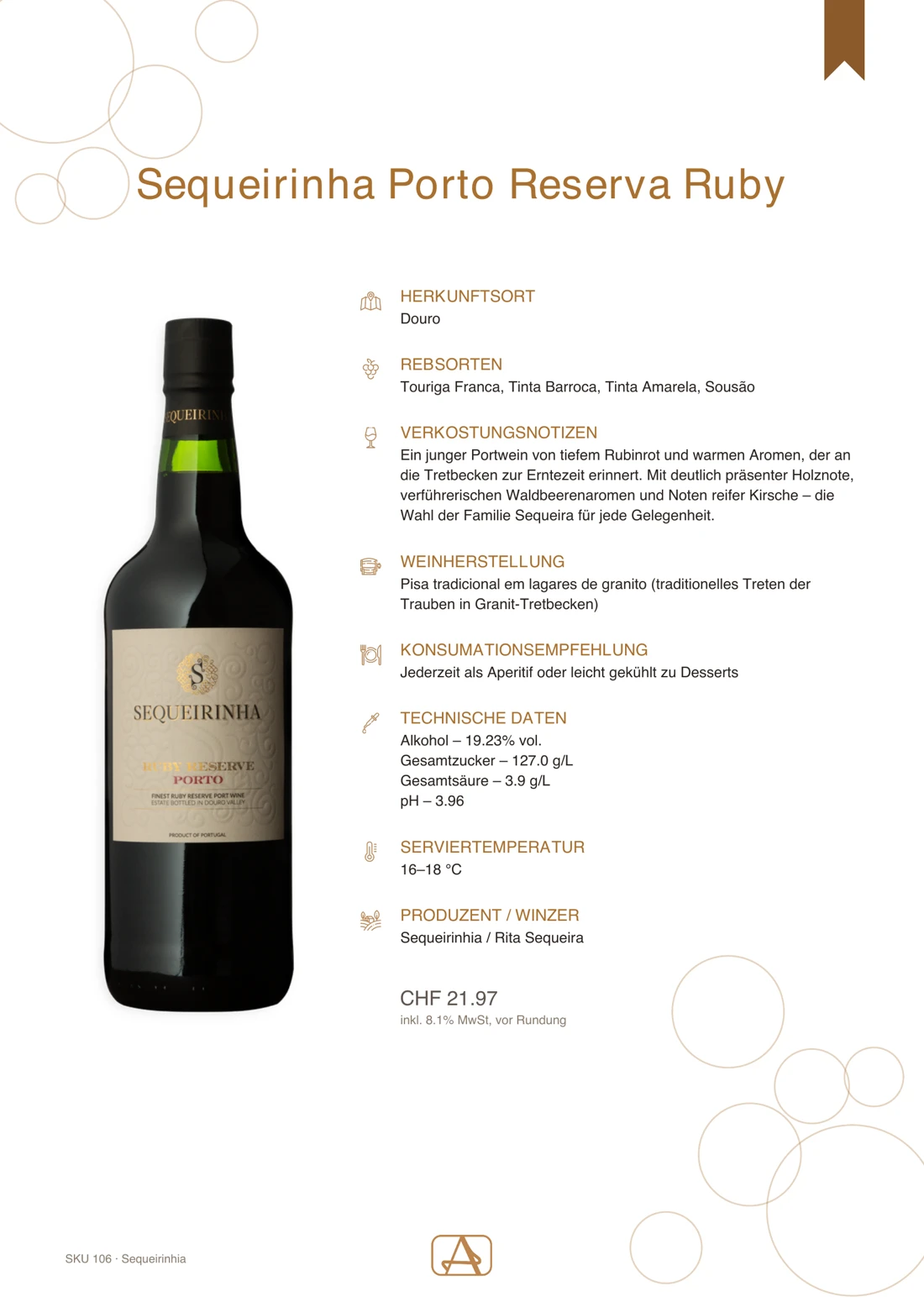
Three years, one fact sheet: typed by hand in InDesign, then turned into a schema for the shop, and now generated from a database that keeps three systems honest.